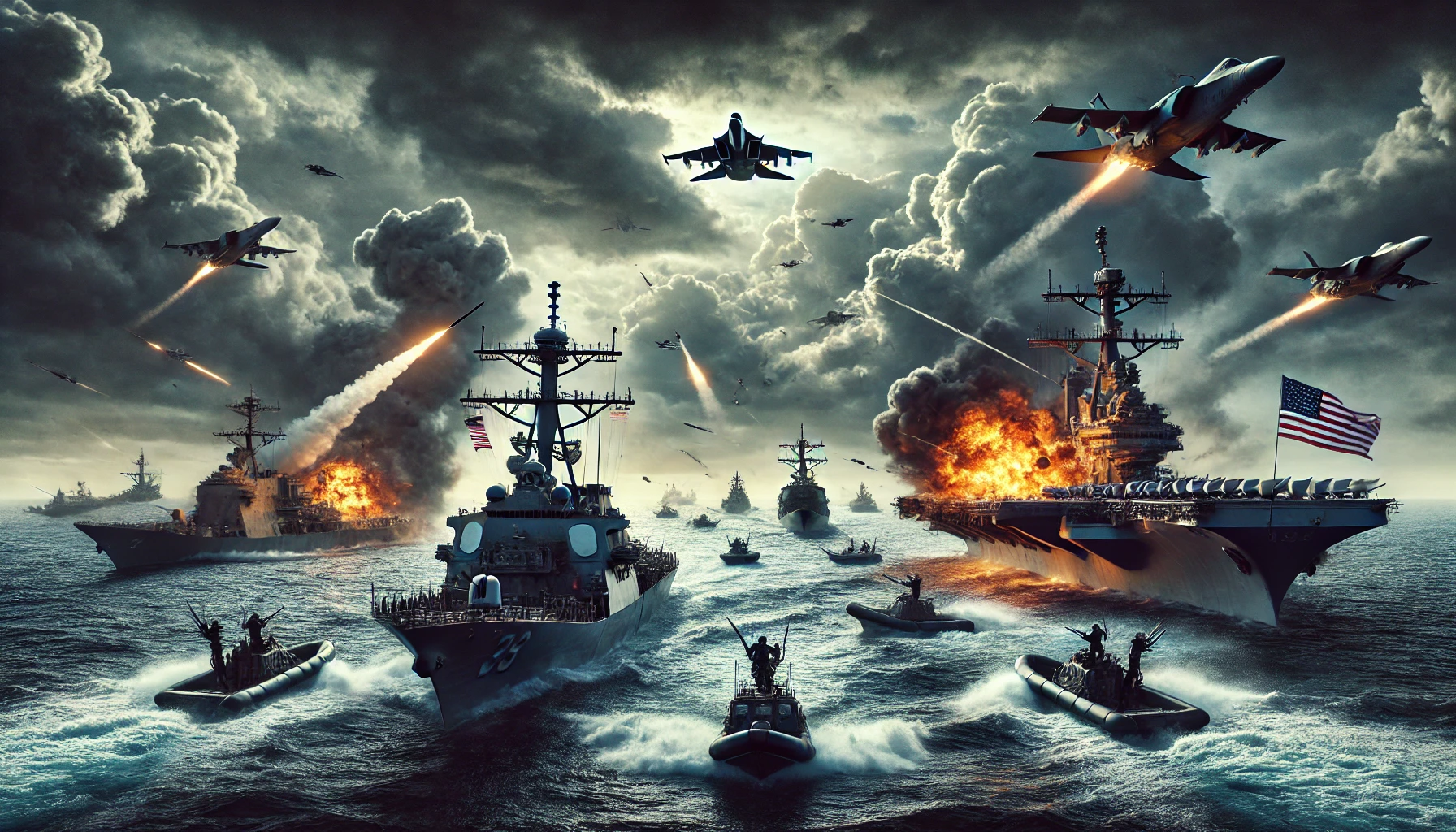
The US Navy is currently embroiled in one of its most intense combat engagements since World War II, as it faces off against Yemen’s Iran-backed Houthi rebels. This conflict has escalated significantly, posing substantial challenges for the US military and highlighting the severity of the ongoing battles.
Historical Context
The Houthi movement, officially known as Ansar Allah, originated in northern Yemen in the 1990s. It began as a response to economic and political marginalization and has since evolved into a formidable military force. Backed by Iran, the Houthis have gained control over significant portions of Yemen, including the capital, Sanaa.
Current Conflict
The US Navy’s engagement with the Houthis has intensified in recent months. The Houthis have launched numerous attacks on maritime targets in the Red Sea and the Gulf of Aden, regions critical to global shipping routes. These attacks have included missile strikes, drone assaults, and the deployment of naval mines, creating a perilous environment for international navigation and necessitating a robust US naval response.
Challenges for the US Navy
- Asymmetric Warfare: The Houthis employ guerrilla tactics and asymmetric warfare, making it difficult for the US Navy to counter their attacks effectively. The use of small, fast boats armed with explosives, along with sophisticated drone technology, poses a unique threat.
- Geopolitical Tensions: The involvement of Iran in backing the Houthis adds a layer of geopolitical complexity. The US Navy must navigate these tensions carefully to avoid a broader conflict with Iran, which could have far-reaching consequences for regional and global stability.
- Logistical Strain: Prolonged engagement in the region strains US naval resources. Maintaining a constant presence to protect shipping lanes and respond to Houthi attacks requires significant logistical support and coordination.
Expert Analysis
Military experts emphasize the severity of the current battles. According to Admiral James Stavridis, a former NATO Supreme Allied Commander, “The conflict with the Houthis represents a significant escalation in naval warfare for the US. The Houthis’ ability to strike maritime targets with precision and persistence challenges the conventional superiority of the US Navy.”
Dr. Michael Knights, a senior fellow at the Washington Institute for Near East Policy, adds, “This conflict underscores the evolving nature of naval warfare. The US Navy must adapt to counter unconventional threats effectively. The Houthis have demonstrated a remarkable capacity to disrupt maritime operations, necessitating a reassessment of naval strategies and tactics.”
Strategic Implications
The ongoing conflict has several strategic implications for the US:
- Maritime Security: Ensuring the security of critical maritime routes remains a top priority. The US Navy’s efforts to safeguard these waters are essential for global trade and energy supplies.
- Regional Stability: The conflict contributes to the broader instability in the Middle East. The US must balance its military engagement with diplomatic efforts to stabilize the region and mitigate the humanitarian crisis in Yemen.
- Technological Adaptation: The engagement with the Houthis highlights the need for technological innovation in naval warfare. Investing in advanced countermeasures, such as improved missile defense systems and enhanced drone capabilities, is crucial for maintaining naval dominance.
Conclusion
The US Navy’s engagement with Yemen’s Iran-backed Houthi rebels marks one of the most intense combat scenarios it has faced since World War II. The complexity and severity of this conflict underscore the evolving nature of naval warfare and the substantial challenges posed by asymmetric threats. As the US navigates this perilous landscape, a combination of military strength, strategic innovation, and diplomatic efforts will be essential to achieving long-term stability and security in the region.