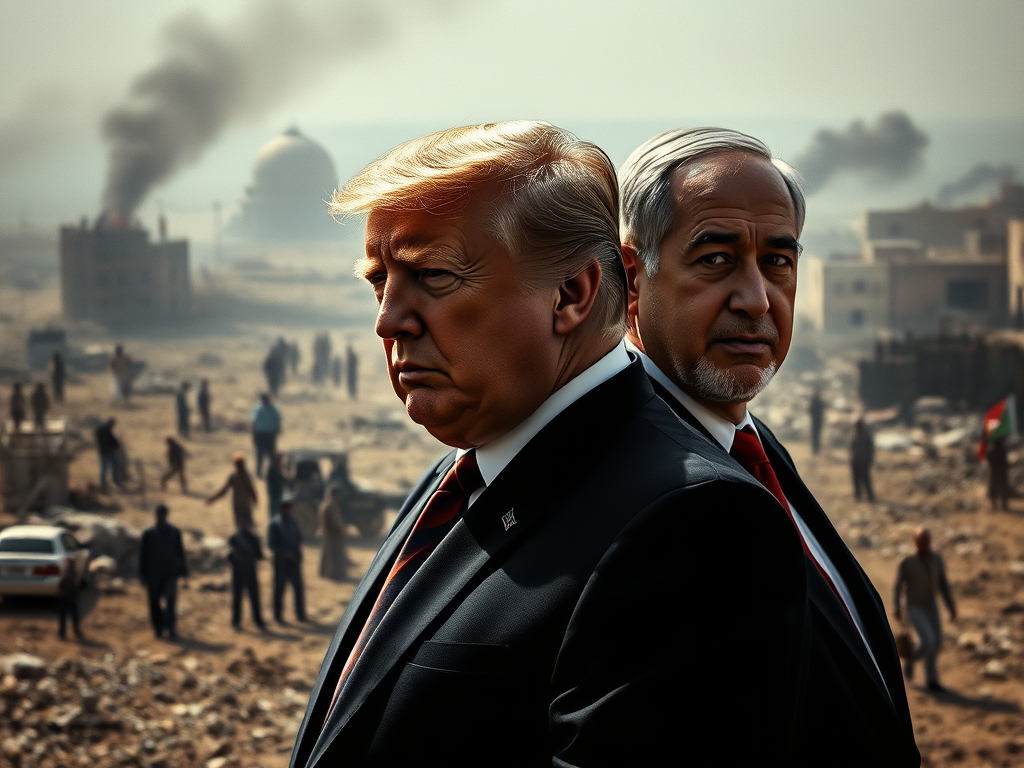
Trump Declares US Will Take Over Gaza – A Bold Move or a Dangerous Precedent?
In a statement that has sent shockwaves across the globe, President Donald Trump announced that the United States would “take over” and “own” the Gaza Strip. Speaking alongside Israeli Prime Minister Benjamin Netanyahu, Trump outlined a radical vision for the war-torn region, promising economic revitalization while simultaneously calling for the mass displacement of Gaza’s 2 million Palestinian residents.
The Case for Trump’s Plan: A Bold Vision for Stability
Supporters of Trump’s proposal argue that Gaza has been plagued by instability for decades, suffering from extreme poverty, high unemployment, and continuous conflicts with Israel. Under American control, proponents suggest, the region could be transformed into a thriving economic hub, free from the influence of Hamas and radical groups.
- Economic Revitalization – Trump’s plan promises an economic overhaul, turning Gaza into what he envisions as the “Middle Eastern Riviera.” With American infrastructure investment, improved trade opportunities, and job creation, Gaza could see unprecedented growth.
- Eliminating Terrorist Influence – A major issue in Gaza is Hamas’ control. By displacing its leadership and removing Palestinian militant factions, the U.S. could create a more stable and secure region.
- Regional Peace Prospects – By controlling Gaza, the U.S. might be able to broker long-term peace between Israel and Palestine, eliminating a major flashpoint for violence.
- Humanitarian Benefits – While controversial, forced relocation might be framed as a way to improve the quality of life for Palestinians, placing them in areas with more stability, economic opportunities, and access to services.
The Case Against Trump’s Plan: A Humanitarian and Legal Nightmare
Despite the ambitious vision, critics argue that this proposal is legally, morally, and logistically indefensible.
- Ethnic Cleansing Accusations – The forced displacement of 2 million Palestinians would be widely condemned as ethnic cleansing. Under international law, such a move would violate numerous treaties, and the United Nations would likely take action against it.
- A Violation of Sovereignty – The idea of the U.S. unilaterally taking control of a foreign land without consent sets a dangerous precedent. This could invite similar actions from other nations and increase global tensions.
- Military Occupation Risks – Enforcing such a move would likely require American military intervention, leading to another costly and prolonged conflict in the Middle East. The potential for guerrilla warfare and resistance from local populations makes this a volatile scenario.
- Regional Backlash – Nations such as Egypt and Jordan have historically refused to accept large numbers of Palestinian refugees. The forced migration could strain relations with U.S. allies and destabilize neighboring countries.
- Logistical and Moral Challenges – Even if Gaza were rebuilt as an economic powerhouse, the question remains: at what cost? Displacing millions, erasing Palestinian heritage, and ignoring self-determination contradict the principles of democracy and human rights.
Conclusion: A Gamble with Global Implications
Whether this is a serious policy proposal or just political posturing, Trump’s statement has ignited a critical debate. While there are potential economic and security benefits, the human cost and legal ramifications are severe.
Is the promise of stability worth the risk of international condemnation, war, and potential human rights violations? This proposal forces the world to weigh economic ambition against ethical responsibility. The coming weeks will reveal whether this idea gains traction or is dismissed as another polarizing move from the president.