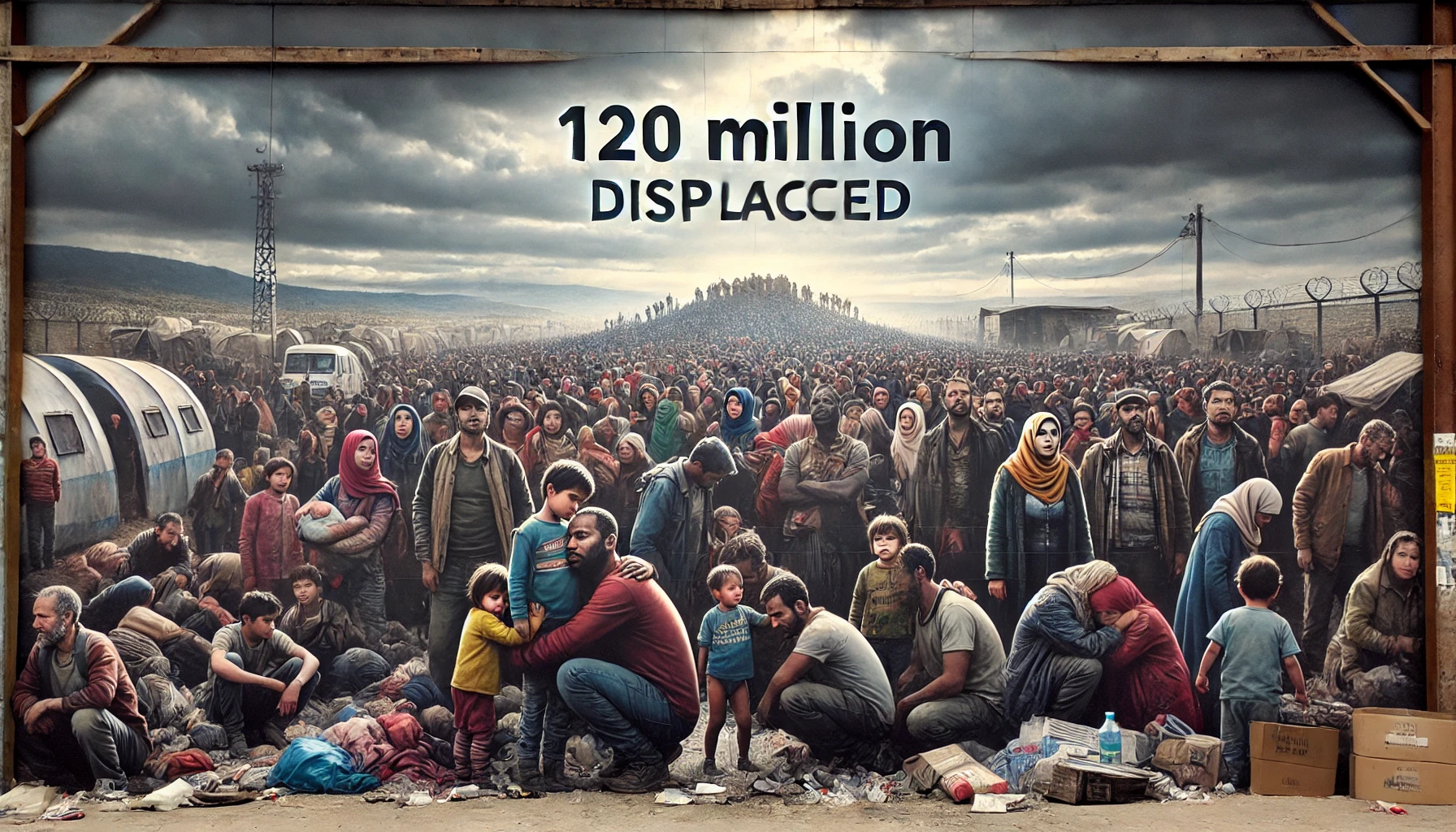
The number of forcibly displaced people worldwide has reached an unprecedented high of over 120 million. This alarming increase has been driven primarily by escalating conflicts in Sudan, Myanmar, and the Gaza Strip, underscoring the severe humanitarian crises unfolding in these regions.
A Stark Increase in Displacement
The current figure represents a significant rise from previous years, reflecting the intensification of conflicts and the resultant mass exodus of people seeking safety. In comparison, global displacement figures from recent years had hovered around 80 to 90 million, already indicating a distressing trend. However, the leap to 120 million marks a new, sobering reality for global displacement.
Sudan: A Nation in Turmoil
In Sudan, ongoing violence and political instability have led to widespread displacement. The conflict, which began as a political power struggle, has devolved into a full-blown humanitarian crisis. The violence has forced millions to flee their homes, seeking refuge within the country and across its borders. Neighboring countries have struggled to accommodate the influx of refugees, exacerbating regional tensions and humanitarian challenges.
Myanmar: Ethnic and Political Strife
Myanmar continues to grapple with ethnic conflicts and political turmoil. The Rohingya crisis remains unresolved, with hundreds of thousands of Rohingya Muslims living in dire conditions in refugee camps in Bangladesh. Additionally, ongoing clashes between the military and ethnic armed groups have displaced countless civilians, further compounding the country’s humanitarian crisis.
The Gaza Strip: A Humanitarian Emergency
In the Gaza Strip, persistent conflict has created a dire humanitarian situation. Frequent hostilities between Israeli forces and Palestinian groups have resulted in significant loss of life and infrastructure, forcing many to flee their homes. The blockade on Gaza has exacerbated the crisis, leaving the population with limited access to essential services and humanitarian aid.
Global Implications and the Path Forward
The unprecedented number of forcibly displaced people presents a critical challenge to the international community. Humanitarian organizations and governments must coordinate efforts to provide immediate relief and address the root causes of displacement. Sustainable solutions are needed to ensure the safety, dignity, and well-being of those affected by these conflicts.
In the face of these crises, it is imperative for global leaders to work towards peaceful resolutions and support efforts to rebuild and stabilize affected regions. Only through concerted international action can the cycle of displacement and conflict be broken, paving the way for a more secure and humane future for millions of displaced individuals.